AIYIMA T9 Review: Is the Original Hybrid Tube Amp Still Worth It?
Quick verdict: The original AIYIMA T9 remains a convenient small amplifier for passive speakers because it combines RCA, Bluetooth, USB, optical and coaxial inputs with tone controls and a subwoofer output. Its main problem is not functionality but competition from the newer T9 Pro, which is often the better purchase when prices are close.
This AIYIMA T9 review is an independent, research-based assessment of the product’s published specifications, system role and practical buying considerations. It is not presented as a laboratory measurement or a claim of hands-on listening.
What Is the AIYIMA T9?
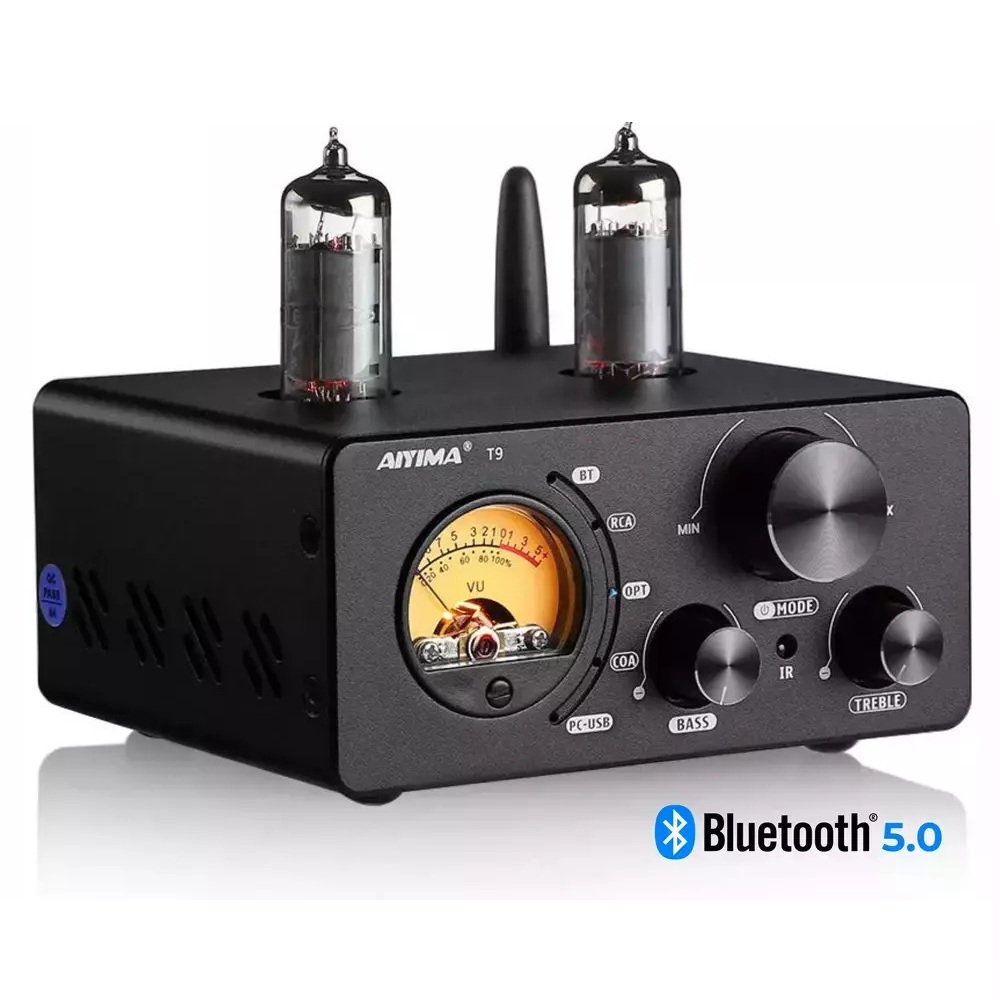
The T9 combines several components that would otherwise require separate boxes: a digital-to-analog converter, Bluetooth receiver, analog preamp stage, small-signal tubes and Class D power amplification. The VU meter and exposed tubes give it a recognizable desktop appearance.
Its broad input selection is the reason to consider it. A computer can connect through USB, a television through optical, a CD transport through coaxial and a conventional analog source through RCA. Passive speakers connect directly to the rear binding posts, while the subwoofer output can feed an active subwoofer.
This is a hybrid design. The 6K4 tubes are used in the signal path, while semiconductor amplification supplies the power required by speakers. Buyers seeking output transformers and power tubes should look at traditional full-tube amplifiers instead.
Key Specifications
| Product type | Hybrid tube integrated DAC and speaker amplifier |
|---|---|
| Inputs | Bluetooth, RCA, USB, optical and coaxial |
| Outputs | Passive speakers and active subwoofer |
| Tube type | Two 6K4 tubes |
| Replaceable tube families listed | 6J1, 6J2, GE5654, 6J3, 6J4, 6AK5 and related types |
| Amplifier platform | TPA3221-based hybrid design, according to AIYIMA product data |
| USB support | Up to 24-bit/96 kHz published |
| Optical/coaxial support | Up to 24-bit/192 kHz published |
| Bluetooth rate | 24-bit/48 kHz published |
| Published THD | 0.07% |
| Published SNR | ≥98 dB |
| Speaker impedance | 3-8 Ω listed |
| Maximum power claim | 100 W × 2 into 4 Ω |
| Power input | DC 18-30 V |
| Dimensions | 115 × 98 × 54 mm |
Specification note: Published power, noise and distortion figures are manufacturer data. They may use different test conditions from independent laboratory measurements and should be compared cautiously.
Design and Build
The T9 is compact enough for a desk, television stand or small shelf. The front VU meter is primarily a visual feature rather than a precision test instrument. Because the tubes and amplifier both produce heat, leave space around the enclosure and do not cover the ventilation areas.
Inputs, Outputs and System Compatibility
Input flexibility is excellent for the size. USB is convenient for a computer, while optical is normally the safest connection for a television because it avoids ground-loop noise. The RCA input can accept a streamer, DAC or phono preamp, but it is not itself a phono input. The subwoofer output requires a powered subwoofer. There is no dedicated headphone output.
Affiliate disclosure: TubeDecoded may earn a commission from qualifying purchases made through links in this article. This does not increase the price you pay or determine our conclusions.
How Important Is the Tube Stage?
The two 6K4 tubes operate before the solid-state power stage and can be replaced with compatible small-signal types listed by AIYIMA. Tube changes may alter gain, noise and tonal balance, but should not be expected to transform the basic character of the Class D output stage. Always replace both channels consistently and never hot-swap tubes.
What Should It Sound Like?
The T9 is designed for an accessible, slightly adjustable presentation rather than strict studio monitoring. Bass and treble controls allow more obvious tuning than tube rolling. Real speaker power depends on the power adapter, load impedance, distortion limit and cooling, so the published 100 W-per-channel figure should be treated as a maximum condition rather than continuous clean output in every system.
AIYIMA T9 Pros and Cons
Advantages
- Five useful input types
- Direct output for passive speakers
- Active subwoofer connection
- Compact all-in-one format
- Tone controls and visible VU meter
- Replaceable small-signal tubes
Limitations
- No headphone output
- No built-in phono stage
- Maximum power claim requires context
- USB input is limited to a lower published rate than optical/coaxial
- The newer T9 Pro may offer better value at a similar price
Recommended Setup
- Choose optical for a TV, USB for a computer or RCA for an existing DAC or phono stage.
- Use speakers within the supported impedance range.
- Confirm that the selected power adapter is included and suitable for the local mains plug.
- Connect only an active subwoofer to the subwoofer output.
- Begin with bass and treble controls centered.
- Compare the final price with the T9 Pro before ordering.
Who Should Buy It?
The T9 fits a first desktop or small-room system where several digital sources must feed passive bookshelf speakers. It is less attractive for demanding low-sensitivity speakers, headphone-only use or buyers who already own a high-quality DAC and preamp.
Alternatives to Consider
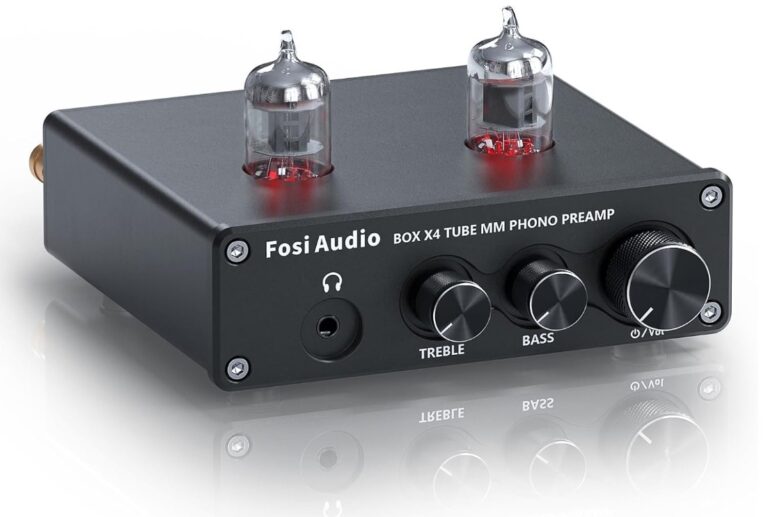
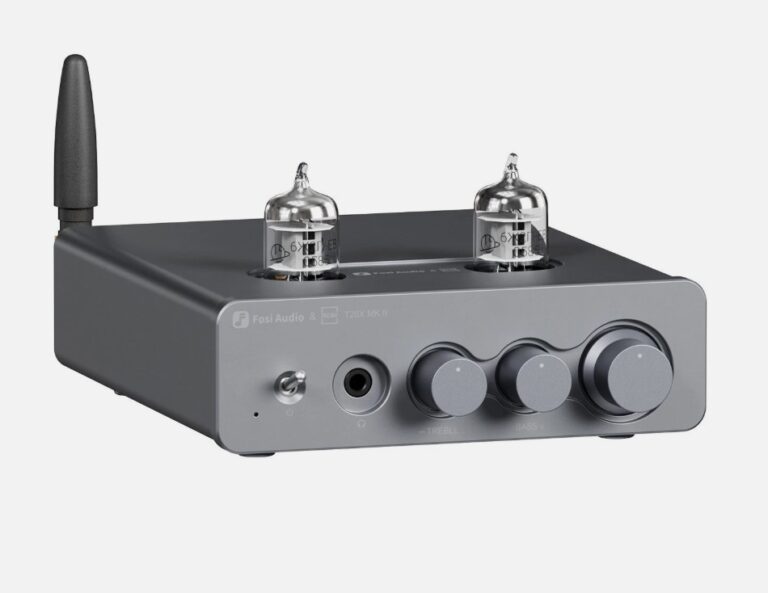
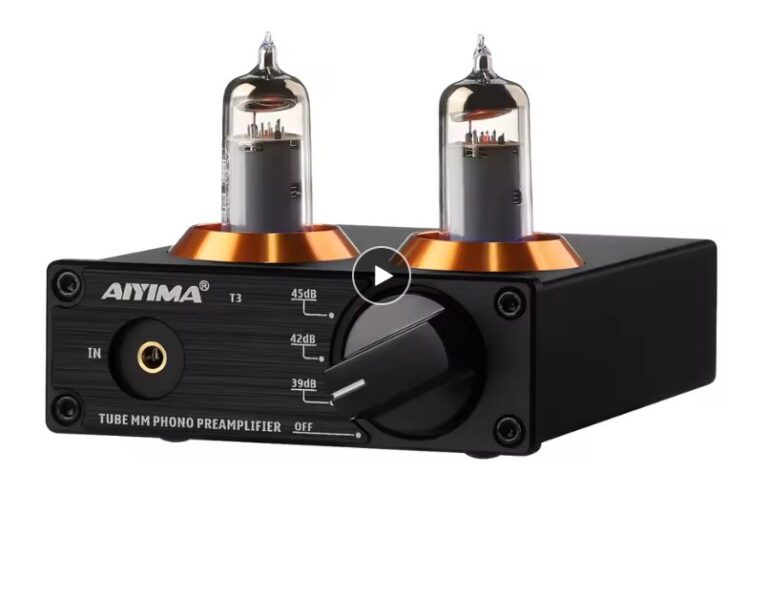
The AIYIMA T9 Pro is the direct upgrade and should be compared carefully. The Fosi MC331 adds a headphone output and remote-controlled features. The Fosi T20X MKII offers more power-focused amplification but fewer digital inputs. The Douk Audio X1 is relevant when an MM phono input is more important than USB and optical.
Frequently Asked Questions
Is the AIYIMA T9 a full tube amplifier?
No. It is a hybrid design with small-signal tubes and a solid-state Class D power stage.
Can it power passive speakers?
Yes. That is one of its main functions, provided the speakers are compatible with the amplifier and power supply.
Does it have a headphone output?
No. Headphone users need a separate headphone amplifier or a different integrated model.
Can a turntable connect directly?
Only if the turntable has a built-in phono preamp. Otherwise a separate phono stage is required.
Should I buy the T9 or T9 Pro?
The original T9 is reasonable when significantly cheaper. When prices are close, the T9 Pro is normally the more attractive current model.
Final Verdict
TubeDecoded conclusion: The AIYIMA T9 is still a capable entry-level all-in-one amplifier. Its broad connectivity and compact size remain useful, but it should now be judged primarily on price. A substantial discount can make it a good buy; otherwise the T9 Pro or Fosi MC331 offers a more current package.
Official Product Information
Specifications and current model information were checked against the official AIYIMA T9 product page. Product revisions, included accessories and availability can change, so verify the seller listing before ordering.